Missed an MTD Quarterly Deadline? Your 30-Day Recovery Plan
Missed your MTD quarterly update deadline? Don't panic. Here's exactly what to do over the next 30 days, what HMRC will (and won't) charge you, and how to get back on track.
Published 23 Apr 2026

You missed your Making Tax Digital quarterly update deadline. First, breathe. The world hasn't ended, and for the 2026/27 tax year you're not going to be fined for being late on a quarterly update. But you do need to get your house in order, and the next 30 days matter.
The 2026/27 grace period
HMRC has explicitly waived late submission penalty points for quarterly updates during the first MTD year (the 2026/27 tax year). That means missing an August or November deadline this year doesn't earn you a point or trigger a £200 fine.
But the grace period only covers the quarterly submissions themselves. It does not cover:
- Late payment of any tax owed (interest still accrues)
- The year-end tax return (separate, end-of-year)
- Submissions for the 2027/28 tax year and beyond
Days 1–7: Submit immediately
The single most important thing is to submit your overdue quarterly update as soon as possible. The longer you leave it, the more your records get out of sync, and the harder the next quarter becomes.
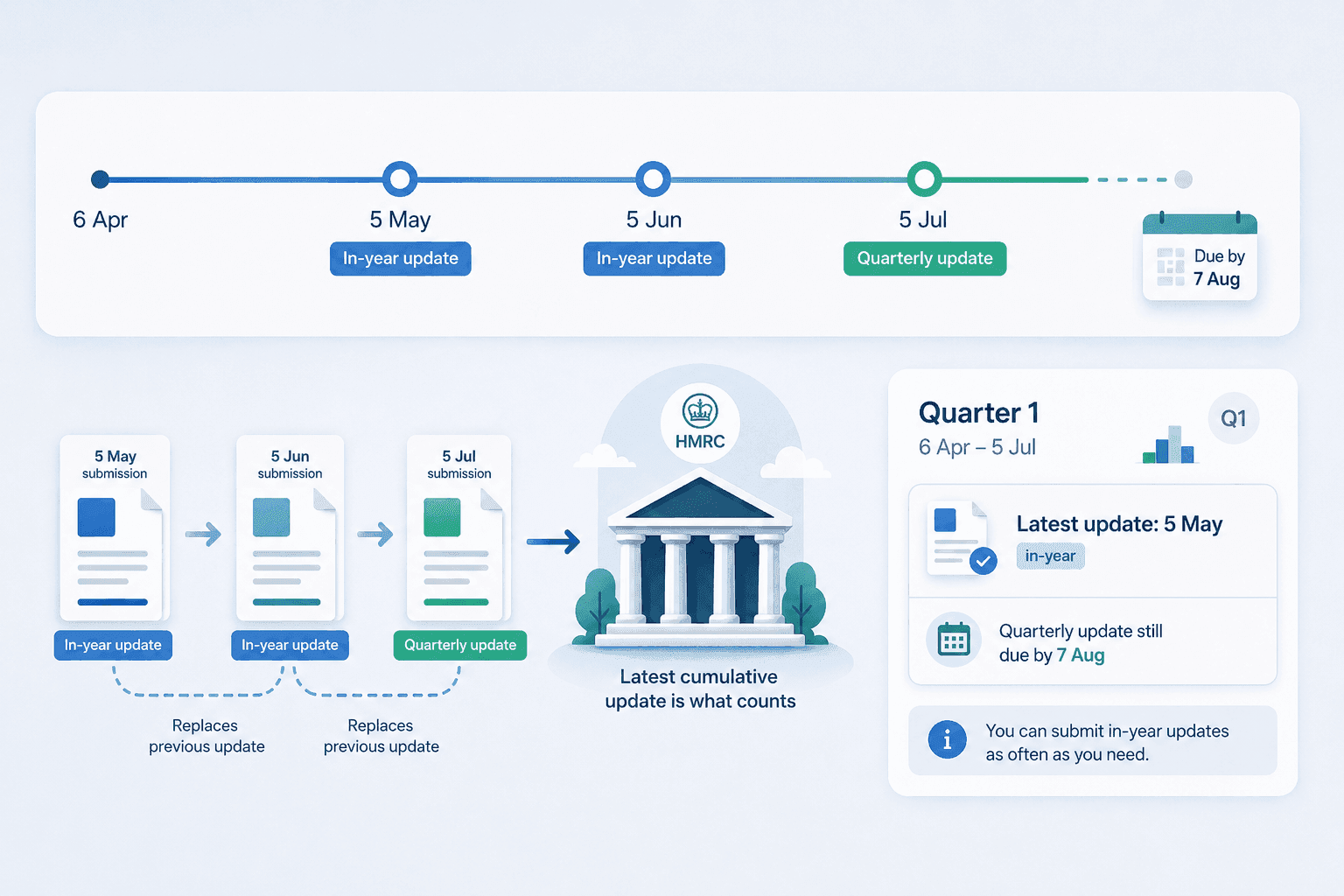
Open your spreadsheet, get your year-to-date totals (under the cumulative model, that's everything from 6 April to the end of your missed quarter), and submit through your MTD software. The submission itself takes minutes.
If you haven't yet signed up for MTD on GOV.UK or chosen software, do those first, but don't let the setup delay take more than a day or two. Bridging software like flonancial is free and takes minutes to set up.
Days 8–14: Verify HMRC received it
Log into your HMRC online account and check that your submission shows under your MTD obligations. You should see the quarter's status flip from "Open" to "Fulfilled". If it doesn't, contact HMRC or your software provider.
Save a copy of your submission's correlation ID, that's the unique reference HMRC returns when you submit. It's your proof.
Days 15–30: Set up so it doesn't happen again
The MTD quarterly deadlines for 2026/27 are:
- Q1: 7 August 2026 (covers 6 April – 5 July)
- Q2: 7 November 2026 (covers 6 April – 5 October)
- Q3: 7 February 2027 (covers 6 April – 5 January)
- Q4: 7 May 2027 (covers the full tax year)
Add all four to your calendar with 7-day reminders. Set a recurring monthly reminder to update your spreadsheet, most missed deadlines come from records being weeks behind, not from forgetting the date.
What if HMRC sends you a penalty notice anyway?
Mistakes happen. If you receive a £200 penalty notice during the 2026/27 grace period for a late quarterly submission, that's an HMRC error, appeal it. The official guidance is that quarterly penalty points are waived for this tax year. You can appeal online through your Personal Tax Account, citing the published grace period.
For penalties that don't fall under the grace period (late payment of tax, late year-end tax return, late submissions in 2027/28+), the appeal process is the same but you'll need a "reasonable excuse", illness, bereavement, software failure with proof, etc.
The bigger picture
The grace period exists because HMRC knows MTD is new and the first year will have teething problems. They don't want to penalise people who are genuinely trying. But from the 2027/28 tax year, quarterly-update penalty points are expected to apply, and the income threshold drops to £30,000.
Use the next 12 months to build the habit. Update your records monthly. Submit each quarter on the day you're prompted. After three or four cycles, the whole process will feel routine.
More on deadlines and penalties
Why is flonancial free? What's the catch?
There isn't one. Your spreadsheet is parsed in your browser, the file never touches our servers. HMRC's API is free to use. We never see your individual transactions or bank details, we don't sell your information, and we don't show you ads. The mandatory MTD pieces, quarterly updates and the year-end tax return, will always be free.