MTD Quarterly Deadlines 2026/27: Every Date You Need to Know
All the Making Tax Digital quarterly submission deadlines for the 2026/27 tax year. Don't miss a deadline, know exactly when to submit.
Published 10 Mar 2026
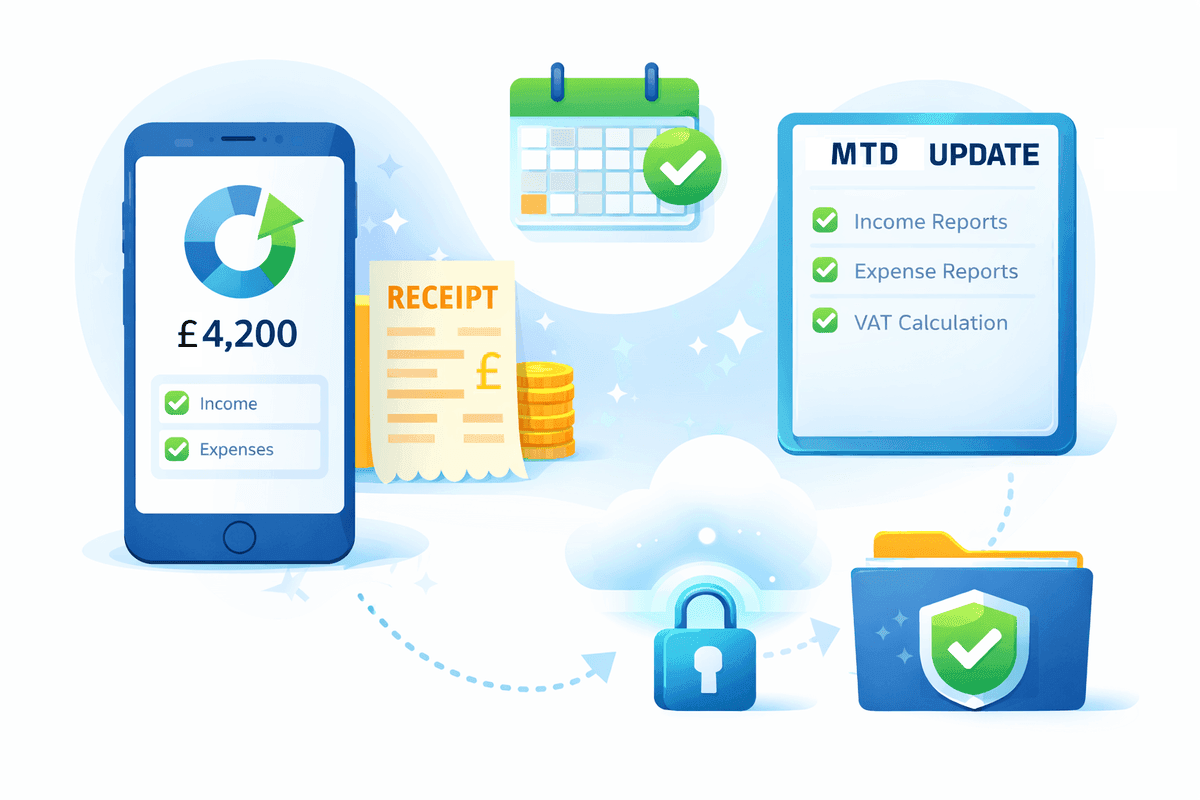
Making Tax Digital for Income Tax has applied since 6 April 2026 for the first group of people with qualifying income over £50,000. Here are all the deadlines you need for the first tax year.
2026/27 quarterly deadlines
For the standard tax year (6 April to 5 April):
| Quarter | Period | Submission deadline |
|---|---|---|
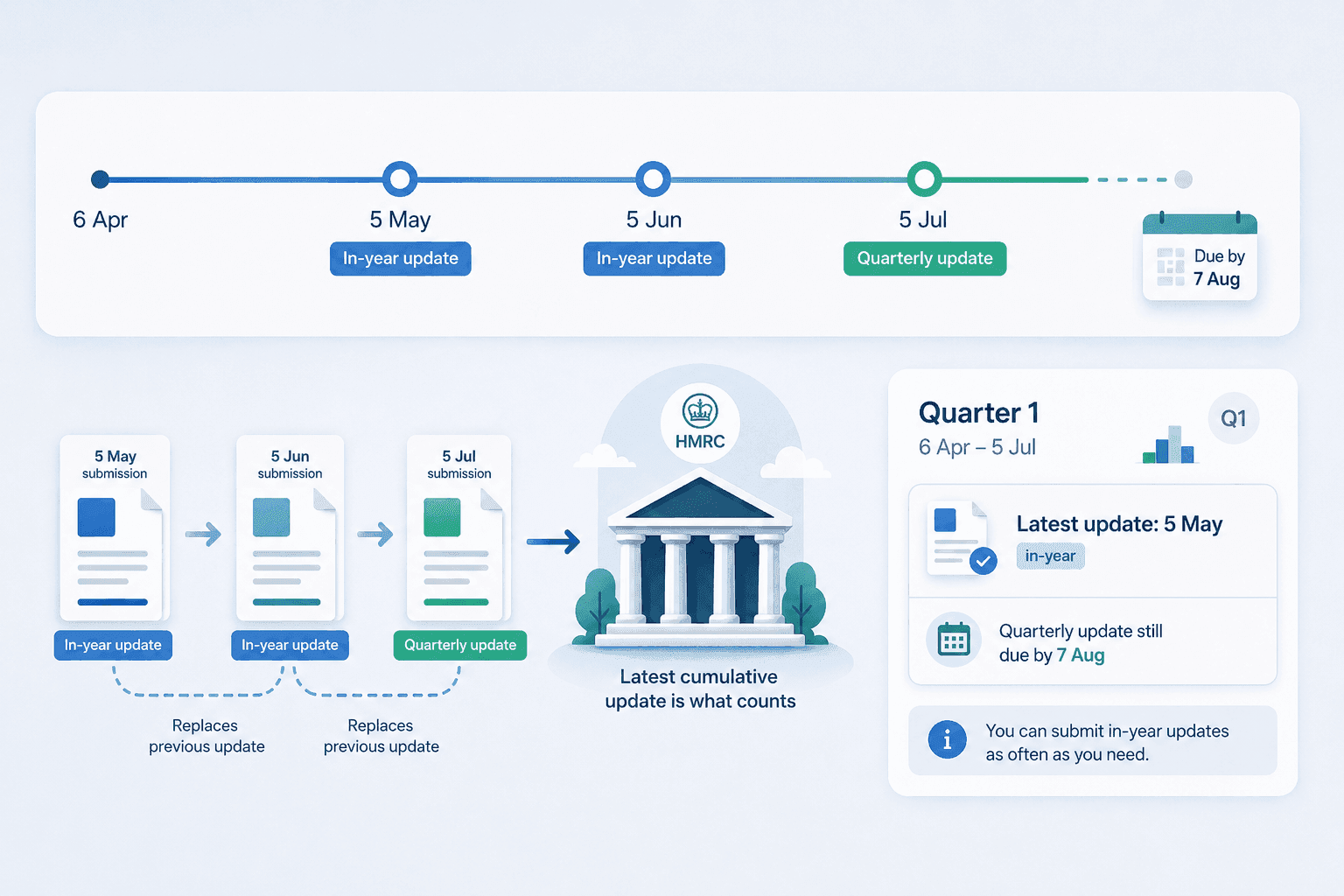
| Q1 | 6 April – 5 July 2026 | 7 August 2026 |
| Q2 | 6 July – 5 October 2026 | 7 November 2026 |
| Q3 | 6 October 2026 – 5 January 2027 | 7 February 2027 |
| Q4 | 6 January – 5 April 2027 | 7 May 2027 |
The year-end tax return (replacing the annual Self Assessment return) is due by 31 January 2028.
How much time do you have?
You get roughly one month after each quarter ends to submit. The exact gap varies between 32 and 33 days depending on the quarter.
What if my accounting year doesn't match the tax year?
Your quarterly update periods are set by HMRC, not by the dates you use for your annual accounts. Most people use the standard quarters, ending 5 July, 5 October, 5 January and 5 April. HMRC also supports calendar quarters ending 30 June, 30 September, 31 December and 31 March. Flonancial follows the valid quarterly periods HMRC provides for your business. Do not change period type simply to use flonancial and, if you are unsure, leave it as standard.
What happens if you miss a deadline?
HMRC's points-based penalty system is still important, but HMRC says it will not apply penalty points for late quarterly updates during the 2026/27 tax year. That gives the first MTD group time to adjust.
The quarterly-update requirement has not gone away. Late payment penalties and interest on late tax payments still apply as normal, and the 2026/27 tax return deadline is still 31 January 2028.
Set a reminder
The deadlines are consistent, roughly the 7th of the month, one month after each quarter ends. Put them in your calendar now. It takes about two minutes to submit each quarter if your records are up to date.
More on deadlines and penalties

Why is flonancial free? What's the catch?
There isn't one. Your spreadsheet is parsed in your browser, the file never touches our servers. HMRC's API is free to use. We never see your individual transactions or bank details, we don't sell your information, and we don't show you ads. The mandatory MTD pieces, quarterly updates and the year-end tax return, will always be free.